AI-Driven Journey: From First Symptoms to Recovery
Envisioning a more connected, supportive experience for members navigating musculoskeletal care—from initial symptoms through treatment and recovery.
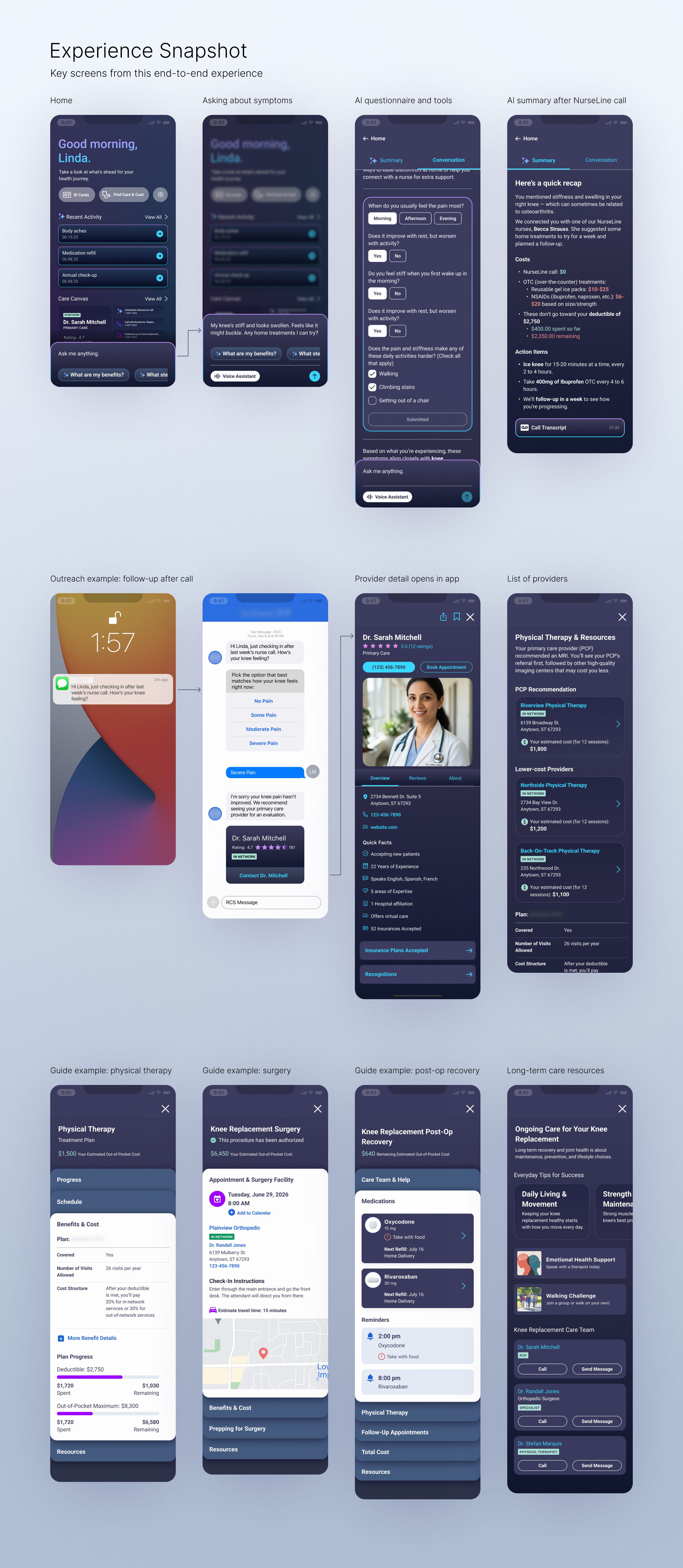
Navigating musculoskeletal (MSK) care can involve a complex series of decisions, appointments, treatments, and follow-ups. I collaborated with two other Product Experience Designers to explore and shape an end-to-end MSK care experience. My contributions included designing the overarching care journey, developing the journey map, creating the app screens, and identifying opportunities for proactive outreach. Together, we explored how a more connected digital experience could help members navigate the complexities of MSK care.
Although the complete experience remains conceptual, elements of the design have begun influencing the existing member experience, including new outreach touchpoints and a streamlined version of the experience. The work has helped inspire a phased approach to bringing the broader vision to life.
Creating a Connected Experience
The journey map served as the foundation for the experience, illustrating how the different phases connect and what members might need at each point. Rather than treating each phase as a standalone feature, the design considered how members transition between stages and how the digital experience could support them along the way.
This end-to-end perspective helped identify opportunities to connect care activities, anticipate member needs, and create a more cohesive experience across the full journey.
Experience Strategy
The Challenge
Making a complex healthcare journey easier to navigate
Musculoskeletal care rarely follows a single, straightforward path. A member might begin by researching symptoms and trying at-home treatments before progressing to physical therapy, specialist care, injections, or surgery. Each stage introduces new appointments, decisions, resources, and follow-up needs. These activities can create a fragmented experience, particularly when members must navigate different stages of care over an extended period.
The challenge was to envision how a health insurance app could support members throughout this journey rather than address individual needs in isolation. Two key objectives guided the design:
Connect the entire experience. Create a cohesive journey that accounts for multiple treatment paths, transitions between phases, and the activities associated with each stage of care.
Simplify healthcare navigation. Help members understand their next steps and access relevant guidance and resources as their needs evolve.
Rather than focusing on a single feature or interaction, the project approached MSK care as an end-to-end experience design challenge: How might a digital experience provide more connected support throughout a member's care journey?
The Approach
Designing the journey from start to finish
The foundation of the concept was a comprehensive view of the MSK care journey, mapping the experience from initial symptom recognition through treatment and recovery. The journey was structured around five distinct phases, each representing a potential stage in a member's care.
Phase 1 — Home care: The experience begins with symptom recognition and research, followed by guidance on at-home treatment, such as ice and NSAIDs. Follow-up outreach supports members as they manage symptoms and determine whether additional care is needed.
Phase 2 — Conservative care: Physical therapy: When home care isn't sufficient, the experience supports the transition to professional care. This phase includes primary care appointments, physical therapy referrals, facility discovery, appointment scheduling, and a 12-week treatment course, with ongoing outreach and progress checks.
Phase 3 — Conservative care: Cortisone injections: For members who need additional treatment, the experience connects primary care follow-ups with specialist referrals, provider discovery, appointment scheduling, and injection treatment. Progress checks help maintain continuity throughout this phase.
Phase 4 — Surgery: When surgery becomes the next step, the experience supports a more involved series of activities, including specialist appointments, MRI orders and scheduling, surgical preparation, authorization updates, surgery resources, and preparation reminders.
Phase 5 — Post-operative recovery: The journey continues beyond the procedure itself. Recovery resources, progress checks, post-operative recovery planning, and longer-term support extend the digital experience into the recovery period.
Designing Proactive Support
Extending the experience beyond the interface
An important aspect of the concept was determining where proactive outreach could provide additional support. Throughout the journey, opportunities were identified to connect members with relevant information, resources, and follow-up at key moments. These touchpoints were designed as an integral part of the overall experience rather than as isolated communications. Examples included:
Providing follow-up guidance after initial treatment.
Helping members find providers and treatment facilities.
Supporting members throughout a course of physical therapy.
Checking progress after specialist treatment.
Helping members prepare for surgery.
Extending support into post-operative recovery.
The placement of outreach touchpoints was informed by the broader care journey, with consideration for when members might need additional guidance or help understanding their next steps.
This required looking beyond individual screens to consider the timing and context of member needs, as well as how digital touchpoints could help bridge the gaps between appointments and treatment milestones. The result was an experience designed around the full care journey, with proactive support woven into the moments where it could help members move forward.
Bringing the Vision to Life
From a comprehensive concept to incremental implementation
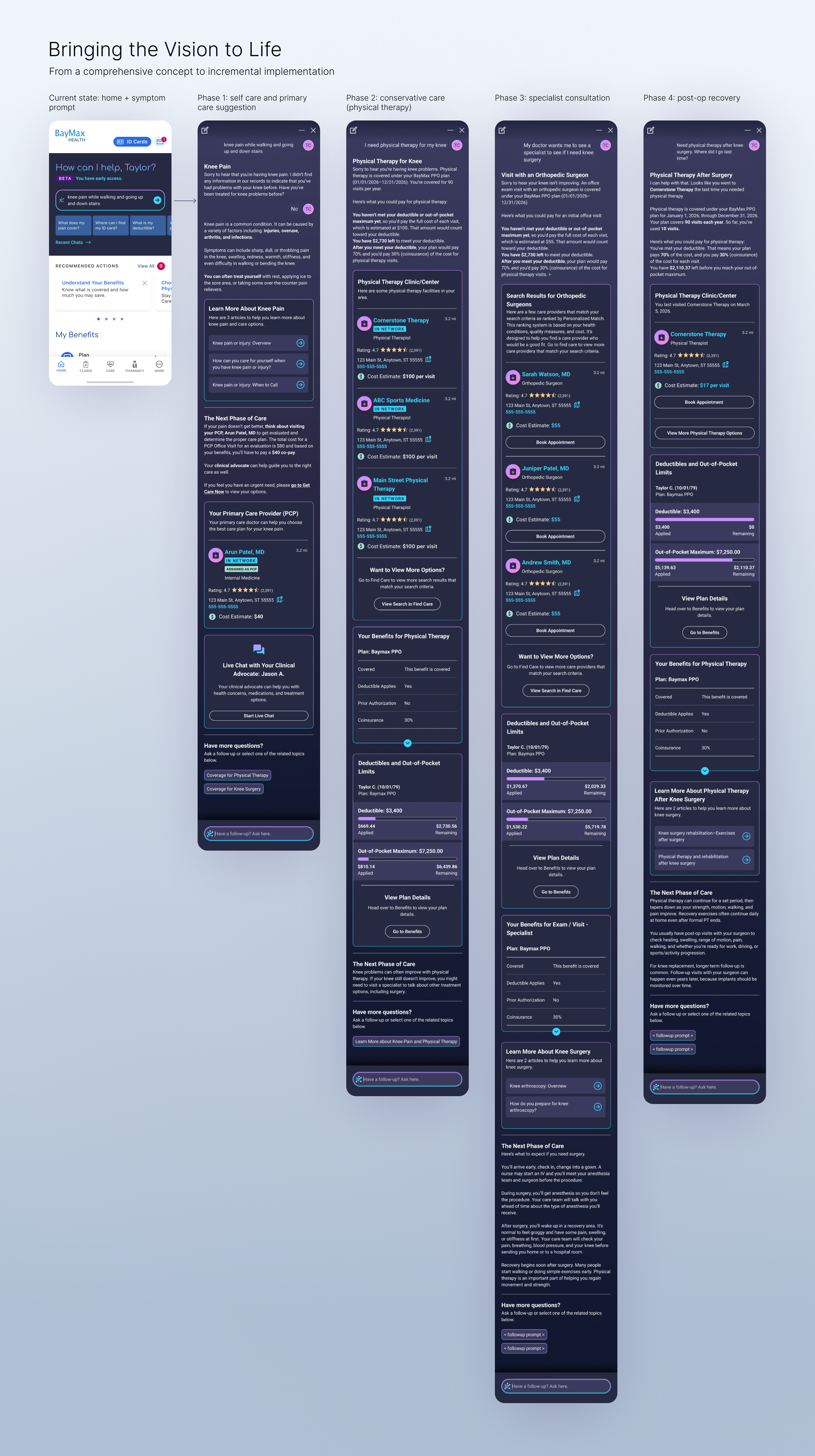
The initial concept explored what a connected, end-to-end MSK care experience could look like. It established a broader vision for how the health insurance app could support members throughout their journey, from initial symptoms through treatment and recovery.
As the concept developed, elements of the experience began influencing the existing product. New outreach touchpoints were introduced, and a streamlined version of the experience was implemented to begin bringing aspects of the broader vision to members. Rather than requiring the entire experience to launch at once, this approach created an opportunity to introduce pieces of the concept incrementally and continue building over time.
The comprehensive journey provided a vision for the future while allowing individual features to be introduced within the existing product. The concept helped inspire the business to begin implementing the experience, demonstrating how end-to-end design exploration can inform incremental product development.